
 Henry Willy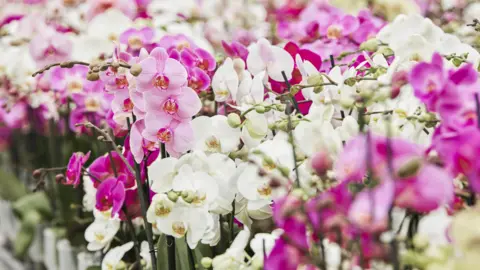
Behind the elegant petals and delicate appearance of orchids lies one of the most fascinating and secretive industries in the global flower market. Across hidden greenhouses, private laboratories, and carefully guarded breeding facilities around the world, orchid breeders spend years — and sometimes decades — creating rare hybrid flowers that can sell for astonishing prices among collectors and luxury plant enthusiasts. The orchid breeding industry has quietly evolved into a highly competitive global business where genetics, patience, science, and exclusivity determine success. While most people see orchids simply as decorative houseplants or gifts sold in supermarkets and garden centers, serious collectors and breeders operate in an entirely different world, one driven by rare species, limited hybrids, international competitions, and sometimes enormous financial rewards. Certain orchids are so rare and desirable that individual plants can sell for thousands or even hundreds of thousands of dollars, especially if they possess unusual colors, patterns, fragrances, or genetic traits that cannot easily be reproduced. In some cases, breeders spend over ten years developing a single commercially viable orchid hybrid, making the process both financially risky and highly secretive.
A World of Rarity and Science
The global fascination with orchids is not new. Orchids have captivated collectors, botanists, and wealthy enthusiasts for centuries because of their extraordinary diversity and exotic appearance. There are more than 25,000 naturally occurring orchid species and well over 100,000 registered hybrids, making orchids one of the largest and most diverse flowering plant families in the world. From tropical rainforests in Thailand and Brazil to mountain regions in Colombia and Ecuador, orchids grow in an astonishing range of environments. Their rarity and complexity helped create “orchid fever” during the 19th century, when wealthy European collectors funded dangerous expeditions into jungles around the world searching for exotic species. Today, modern orchid breeding has become far more scientific, but the obsession with discovering unique and beautiful flowers remains just as intense. Many breeders closely guard their hybridization techniques, parent plant selections, and cultivation methods because a successful new orchid variety can generate major profits through exclusive sales and licensing agreements.
The Slow Art of Cultivation
Unlike ordinary flowers that can be cultivated relatively quickly, breeding orchids is an extremely slow and unpredictable process. Creating a new hybrid often begins with carefully selecting two parent plants that possess desirable traits such as vivid coloration, unusual petal shapes, long blooming periods, or strong fragrances. Pollination is usually done manually by expert breeders who transfer pollen between flowers using delicate tools. Once pollinated, orchid seed pods may take several months to mature, and the microscopic seeds themselves require highly controlled laboratory conditions to germinate successfully. Unlike many plants, orchid seeds contain almost no stored nutrients, meaning they cannot grow naturally without very specific fungal relationships or artificial nutrient-rich environments created in laboratories. After germination, young orchids can take anywhere from three to ten years before they flower for the first time, meaning breeders must invest enormous amounts of time, greenhouse space, and financial resources before even knowing whether a hybrid will succeed commercially. This long development cycle makes orchid breeding a high-risk business where patience is absolutely essential.
The High Stakes of Flower Markets
The financial side of the orchid world has become increasingly lucrative as global demand for rare plants continues to grow. Wealthy collectors in countries such as Japan, Singapore, China, and the United States are willing to pay extraordinary amounts for orchids considered rare, prestigious, or genetically unique. Some collectors view rare orchids as living art pieces or status symbols similar to luxury watches, fine wine, or exotic cars. High-profile orchid competitions and flower exhibitions often play a major role in determining market value, with award-winning plants becoming instantly more desirable and expensive. In some Asian markets, orchids are also associated with prosperity, elegance, and good fortune, further increasing demand among wealthy buyers and businesses. Social media has also transformed the orchid trade by allowing breeders and collectors to showcase rare hybrids to global audiences instantly. Viral plant trends and online collector communities have helped create intense demand for unusual orchid varieties, driving prices even higher for rare specimens.
Despite the glamour surrounding rare orchids, the industry also faces ethical and environmental concerns. Illegal orchid trafficking remains a major global problem because collectors sometimes seek wild species that are endangered or protected under international conservation laws. Many orchids are extremely vulnerable to habitat destruction caused by deforestation, climate change, mining, and agricultural expansion. Conservation groups warn that some rare orchid species are disappearing rapidly in the wild due to both environmental damage and illegal collection. In response, many responsible breeders now focus heavily on laboratory propagation and sustainable cultivation methods to reduce pressure on wild populations. Tissue culture technology allows breeders to reproduce orchids in large numbers without harvesting plants directly from natural habitats, helping preserve endangered species while still meeting collector demand. Botanical gardens and conservation organizations around the world also maintain orchid preservation programs aimed at protecting rare species from extinction.
The Future of Botanical Luxury
The orchid industry has also become increasingly scientific and technologically advanced in recent years. Modern breeders use genetic analysis, climate-controlled greenhouses, artificial lighting systems, and sophisticated laboratory techniques to improve breeding success and accelerate cultivation. Some breeders experiment with creating entirely new color patterns, miniature hybrids for urban homes, or orchids designed to bloom more frequently for commercial retail markets. Biotechnology and tissue culture have revolutionized large-scale orchid production, allowing millions of cloned orchids to be sold globally through supermarkets, online retailers, and garden centers. At the same time, elite breeders continue focusing on exclusivity and rarity, producing limited hybrid lines aimed at serious collectors willing to pay premium prices. This combination of mass production and luxury rarity has created a unique industry where orchids exist both as affordable consumer products and as highly valuable collector assets.
Behind the scenes, however, orchid breeding remains a world defined by secrecy, competition, and passion. Many breeders dedicate their entire lives to developing the perfect flower, often investing years into experiments that may never succeed. Rivalries between breeders can become intense, especially when valuable hybrids or prestigious competition awards are involved. Some breeders closely guard access to parent plants or refuse to reveal specific breeding methods in order to maintain a competitive advantage. Yet despite the commercial pressures, most orchid enthusiasts describe the work as deeply personal and artistic rather than purely financial. For them, the thrill comes not only from profit but from creating something entirely unique — a flower that has never existed before. In many ways, orchid breeding sits at the intersection of science, art, business, and obsession, making it one of the most unusual and captivating industries in the luxury plant world today.