 Wade Jenner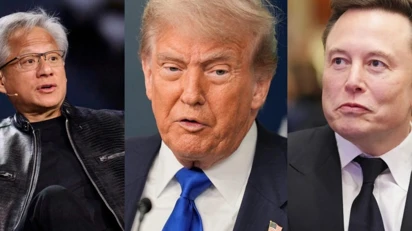
A powerful group of American business leaders, including Elon Musk and Jensen Huang, joined U.S. President Donald Trump during his high-profile diplomatic trip to China this week, highlighting how technology, artificial intelligence, and trade have become central issues in the increasingly complex relationship between the world’s two largest economies. The visit, which includes meetings with Chinese President Xi Jinping in Beijing, comes at a time of rising geopolitical tensions, ongoing disputes over tariffs and semiconductor exports, and growing global competition over AI leadership. The presence of some of America’s most influential corporate executives signals the importance of business diplomacy in shaping the future of U.S.-China relations. Alongside Musk and Huang, other executives reported to be part of the delegation include Tim Cook, Goldman Sachs CEO David Solomon, BlackRock CEO Larry Fink, and leaders from major aerospace and technology companies.
The inclusion of Nvidia chief Jensen Huang became one of the most closely watched developments surrounding the trip because of Nvidia’s critical role in the global artificial intelligence boom. Huang reportedly joined the delegation at the last minute after initially not appearing on the official list of executives traveling with Trump. His presence immediately fueled speculation that semiconductor exports, AI infrastructure, and advanced chip sales to China could become major topics during discussions between Washington and Beijing. Nvidia has been caught in the center of the U.S.-China technology rivalry for years, particularly because the company produces some of the world’s most advanced AI chips. Export restrictions imposed by Washington have limited Nvidia’s ability to sell its most powerful processors to Chinese firms, creating tension between national security concerns and the enormous financial opportunity presented by China’s fast-growing AI market. Analysts estimate that China’s AI infrastructure market could be worth tens of billions of dollars, making it extremely important for companies like Nvidia. Huang has publicly argued that maintaining business ties with China is strategically important for the United States, while critics warn that advanced AI technology could strengthen China’s military and technological capabilities.
Meanwhile, Elon Musk’s participation also carries major significance because of his deep business connections with China through Tesla. China remains one of Tesla’s largest markets and production hubs, with the company’s Shanghai Gigafactory playing a central role in global vehicle manufacturing and exports. Musk has long maintained a complicated but influential relationship with Chinese officials and business leaders, often praising the country’s manufacturing capabilities and economic growth. His presence on the trip is being viewed as both a business and political signal, especially as trade disputes and technology restrictions continue to shape U.S.-China relations. Observers believe Musk could play an informal diplomatic role during discussions involving electric vehicles, clean energy technology, artificial intelligence, and supply chains. Some analysts also see the trip as evidence of improving ties between Musk and Trump after periods of public disagreement in recent years.
The Peak of Geopolitical Diplomacy
The summit itself is considered one of the most important diplomatic meetings between the United States and China in recent years. Trump’s visit marks the first trip by a sitting U.S. president to China in nearly a decade and comes during a period of major geopolitical uncertainty involving trade tensions, Taiwan, artificial intelligence competition, and conflicts in the Middle East. Reports suggest discussions between Trump and Xi Jinping are expected to include tariffs, rare earth mineral supplies, semiconductor restrictions, military tensions around Taiwan, and the broader economic relationship between both countries. Technology and AI are expected to dominate many of the conversations because both Washington and Beijing increasingly view artificial intelligence as a critical strategic industry that could shape global economic and military power in the coming decades. The participation of major tech executives further reinforces how closely business interests are now tied to national security and global diplomacy.
The trip also reflects how corporate leaders are becoming more directly involved in international diplomacy, especially in industries tied to technology, energy, and finance. Executives like Jensen Huang, Elon Musk, and Tim Cook are no longer seen only as business figures — they now influence supply chains, labor markets, technological innovation, and geopolitical strategy across multiple continents. Their companies hold enormous economic power and are deeply connected to both American and Chinese markets. As a result, government leaders increasingly rely on corporate executives during major diplomatic engagements where trade and technology dominate negotiations. Some experts believe these business leaders can help ease tensions by encouraging cooperation and investment between both countries, while others worry that corporate interests may conflict with national security priorities. The balance between economic opportunity and geopolitical competition is becoming harder to manage as the U.S. and China compete for dominance in advanced technologies like AI chips, electric vehicles, robotics, and cloud computing.
Semiconductors and the Future of AI
Another major issue surrounding the visit is the future of semiconductor exports and AI regulation. Nvidia’s advanced chips are considered essential for developing powerful AI systems, data centers, and military applications. U.S. restrictions on semiconductor exports to China have become one of the most sensitive issues in the technology rivalry between the two nations. Chinese companies have been racing to build domestic alternatives to Nvidia’s hardware, while U.S. policymakers debate how much access China should have to advanced computing technology. Huang’s appearance alongside Trump has raised speculation that the summit could lead to negotiations involving export licenses, trade restrictions, or broader technology agreements. Investors closely watched Nvidia’s stock and broader tech markets following news of Huang joining the delegation, interpreting the move as a possible sign of future business opportunities in China.
Beyond business and technology, the summit is also taking place against the backdrop of wider global instability. Discussions are expected to include ongoing tensions involving Iran, global energy markets, and military conflicts affecting international trade routes. Both the United States and China have major economic interests tied to stability in the Middle East and uninterrupted global supply chains. Analysts say the talks between Trump and Xi Jinping could shape not only bilateral trade but also broader geopolitical cooperation on issues affecting the global economy. Investors, governments, and multinational corporations around the world are closely watching the outcome of the visit because decisions made during the summit could influence everything from AI development and semiconductor trade to tariffs, manufacturing, and financial markets for years to come.