 Macro Anton
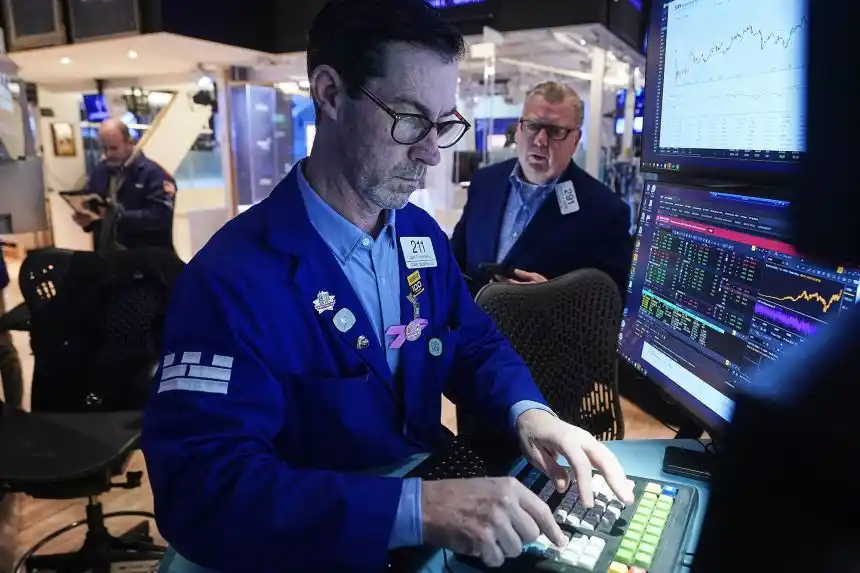
Global technology stocks suffered a major selloff as concerns about the future of artificial-intelligence investment spread across financial markets following the Democratic Party's sweeping victories in the US midterm elections. Shares of semiconductor manufacturers, data-centre operators and companies supplying AI infrastructure came under heavy pressure, wiping trillions of dollars from technology valuations. The election results have raised fears that incoming Democratic lawmakers and newly elected state officials could introduce stricter controls on data-centre construction, potentially slowing one of the biggest investment cycles supporting the global technology industry. The political uncertainty has arrived at a time when investors are already questioning whether enormous spending on AI infrastructure will generate sufficient long-term profits.
The selloff intensified on Thursday, November 5, when Wall Street experienced its sharpest daily decline since the US tariff-related market turmoil of April 2025. The technology-heavy Nasdaq Composite plunged 5.5% to 24,315, while the S&P 500 dropped 4.4% to 7,353.73. The Dow Jones Industrial Average declined 3.4%, losing more than 1,833 points. The losses erased the previous session's gains and pushed the Nasdaq approximately 11.9% below its October record, placing the index in correction territory. Reuters estimated that the selloff wiped around $3 trillion from the market value of S&P 500 companies.
Technology companies were among the biggest casualties. Nvidia shares fell 9.3%, while Advanced Micro Devices dropped 17.3%. Micron Technology lost around 17.5%, and SanDisk plunged more than 22%. The Philadelphia Semiconductor Index, which tracks major US semiconductor companies, fell approximately 12.2%, marking its steepest daily decline since 2020. These companies are closely connected to the expansion of AI computing, making their valuations particularly sensitive to expectations about future demand for chips, memory products and data-centre equipment.
The Political Trigger: Democratic Midterm Victories
The immediate political trigger was the Democratic Party's strong performance in the November 3 midterm elections. The victories strengthened Democratic influence in Congress and several state governments, bringing candidates who had campaigned for greater scrutiny of AI infrastructure into positions of authority. Their proposals include tighter approval requirements for new data centres, stronger environmental standards and restrictions on projects that could increase electricity costs for nearby communities. Investors fear that these policies could delay construction, increase compliance costs and reduce demand for the hardware and services supplied by major technology companies.
Texas has become one of the most closely watched examples. Democratic governor-elect Gina Hinojosa campaigned on stronger conditions for data-centre development, saying projects should provide meaningful benefits to local residents and allow communities a greater role in decisions. Ohio's incoming governor, Amy Acton, has also pledged to block projects that fail to meet specific standards. Both states are important to the expanding US data-centre industry, and restrictions there could affect investment plans by major technology companies and their infrastructure partners.
Opposition to data-centre expansion extends beyond Democratic voters. These facilities require substantial electricity, large quantities of cooling resources and significant infrastructure investment. Residents in several communities have raised concerns about rising utility bills, water consumption, noise and environmental effects. According to an Associated Press review of local referendums, restrictions were approved in 44 of the 45 completed votes tracked across 12 states. The AP Voter Poll also found that approximately three-quarters of US voters opposed a new data centre being built in their community. This suggests that pressure on the industry is not exclusively connected to party politics.
AI Investment Under Scrutiny
For technology investors, the issue is the potential impact on the enormous infrastructure spending behind the AI boom. Companies including Microsoft, Amazon, Alphabet and Meta have committed substantial resources to building data centres, purchasing advanced processors and expanding cloud-computing capacity. These investments have supported revenue expectations for semiconductor manufacturers, equipment suppliers, construction companies and energy providers. If permits become harder to secure or projects take longer to complete, the expected growth in demand across this supply chain could be affected.
However, political uncertainty is not the only reason investors have begun questioning AI valuations. The industry has already faced concerns about the returns generated by the hundreds of billions of dollars being committed to infrastructure. Building advanced data centres requires enormous capital expenditure, long-term electricity agreements and expensive computing equipment. Investors increasingly want evidence that AI products and services can generate enough revenue to justify those costs. A possible slowdown in construction adds another risk to a sector that was already facing questions about profitability and the sustainability of its investment cycle.
Higher borrowing costs have made the situation more difficult. Some smaller AI infrastructure companies depend heavily on external financing to expand their operations. If interest rates remain elevated, financing new facilities becomes more expensive and the financial risks associated with long-term projects increase. Companies that have borrowed heavily to purchase computing equipment could face additional pressure if customers delay contracts or infrastructure demand grows more slowly than expected. Reuters also reported rising concerns about credit exposure among companies and investors closely connected to the AI sector, including SoftBank.
Asian Markets Take the Hit
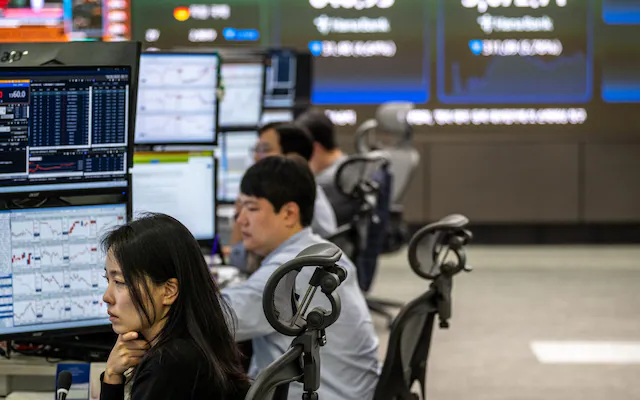
The impact quickly spread to Asia, where manufacturers play a central role in supplying the global AI industry. South Korea's KOSPI index finished Friday, November 6, down 6.02% at 5,059.69, its lowest closing level since March. Earlier in the session, the index fell as much as 8.8%, triggering a 20-minute trading halt. Samsung Electronics ended 6.4% lower, while SK Hynix dropped 10.4%. Foreign investors sold approximately 2.8 trillion won worth of South Korean shares, adding to the pressure on the market.
South Korean authorities responded by holding an emergency meeting to discuss financial-market volatility. Finance Minister Lee Hyoung-il and other policymakers considered measures to reduce the risk of forced selling by investors using borrowed money to purchase shares. Officials also temporarily eased certain rules governing leveraged retail investments. The intervention highlighted how a selloff originating in US technology markets can quickly create financial-stability concerns in countries with significant exposure to semiconductor manufacturing.
Taiwan experienced another major decline because of its importance to the global semiconductor supply chain. The benchmark Taiex fell 4.5% on Friday to 39,702, its lowest level since April 30. Taiwan Semiconductor Manufacturing Company, which accounts for more than 40% of the market's total value, declined 4.7%. During the early trading session, TSMC had reached its daily limit-down price, while other major technology companies, including MediaTek, Foxconn and Delta Electronics, also recorded substantial losses. The selloff underlined the exposure of Asian manufacturers to changes in global AI infrastructure spending.
Japan's Nikkei 225 also fell sharply, dropping more than 7% at one point during Friday trading. Technology and semiconductor-related companies were among the biggest decliners, including Advantest, Kioxia, Rohm and SoftBank Group. Japan's position as a major supplier of semiconductor equipment, materials and data-centre components has made its technology sector particularly vulnerable to a potential slowdown in AI infrastructure investment. The decline extended a broader retreat in Japanese technology shares that had begun earlier in the week as the US election results became clearer.
European and Wider Market Impact
European markets were also affected. The pan-European STOXX 600 fell 1.6% to 644.72 points during early trading on Friday, erasing its weekly gains. Technology shares had already declined during Thursday's session, with semiconductor-related companies such as ASML, Infineon, Soitec and Siltronic among the major losers. Europe has comparatively less exposure to the AI trade than the US and parts of Asia, but concerns about reduced data-centre investment and weaker technology demand have created pressure across the region's industrial and technology businesses.
The financial impact could extend beyond chipmakers. Data-centre construction supports demand for electrical equipment, cooling systems, power infrastructure, networking hardware, construction services and specialist engineering. Companies supplying these products could experience slower orders if major technology firms postpone projects. Electricity providers and energy infrastructure businesses may also face changes in demand forecasts. The consequences therefore reach beyond the technology sector into manufacturing, utilities, industrial investment and employment.
Are Markets Overreacting?
There are signs, however, that investors may be interpreting the election results too aggressively. South Korean market analysts described the sharp losses as potentially excessive, pointing out that Democratic victories do not automatically mean all data-centre projects will be cancelled. Proposed restrictions may focus on environmental standards, electricity costs and community consultation rather than a nationwide prohibition on new facilities. Technology companies could continue expanding in states with more favourable regulations, although relocating projects or securing new permits could increase costs and delay investment.
The distinction between federal and state authority will be important. The incoming Democratic congressional majority may pursue national legislation and conduct oversight of AI infrastructure, but state governments and local authorities also play significant roles in land use, electricity planning, environmental approvals and construction permits. A fragmented regulatory environment could emerge, with some states continuing to attract major AI investments while others introduce stricter requirements. Investors will therefore be watching individual state policies rather than assuming that the election results will produce one uniform national approach.
The market reaction has also encouraged investors to reconsider how much future growth is already reflected in technology share prices. Semiconductor companies experienced substantial gains during the AI investment boom, with demand for advanced processors and high-bandwidth memory driving expectations for years of expansion. A change in those expectations can lead to rapid valuation adjustments, particularly when large institutional investors reduce exposure to crowded trades. Reuters reported that hedge-fund selling and concerns about investment returns may have intensified the market decline alongside political uncertainty.
For the global economy, the implications are potentially significant. AI infrastructure spending has become an important source of investment, supporting construction activity, equipment manufacturing and demand for electricity. A prolonged slowdown could affect suppliers and workers across several countries, not just the companies directly developing AI models. At the same time, restrictions aimed at controlling energy costs and protecting local communities could influence where future technology investment takes place. The challenge for policymakers will be balancing the economic opportunities of AI development against its growing environmental and infrastructure demands.
The immediate direction of the market remains uncertain. Some investors may view the declines as an opportunity to buy shares at lower valuations, while others may wait for greater clarity on US policy and evidence that AI companies can generate sustainable returns. A rebound in technology stocks would depend partly on whether the market concludes that the election results will not materially disrupt data-centre construction. Continued weakness, however, could indicate that investors are reassessing the pace and profitability of the entire AI investment cycle.
The global technology selloff ultimately reflects the collision of political uncertainty and financial expectations. Democratic victories have increased the possibility of stricter scrutiny of data-centre projects, but concerns about excessive valuations, borrowing costs and the profitability of AI investments were already present. The coming months will reveal whether the latest losses represent a temporary correction in an expanding industry or the beginning of a longer adjustment in expectations for AI infrastructure growth. For technology companies, investors and semiconductor-producing economies, the central question is no longer simply how quickly AI can expand, but whether that expansion can continue at the scale financial markets had anticipated.
What to Watch Next
Investors will closely monitor the incoming Democratic Congress's proposals on AI regulation, data-centre permits and electricity costs, along with policy announcements from newly elected state governors. Further developments in semiconductor demand, AI-company earnings, data-centre investment plans and borrowing costs will help determine whether the global technology selloff stabilises or extends into the coming weeks.
[object Object],[object Object],[object Object],[object Object],[object Object],[object Object],[object Object]