
 Henry Willy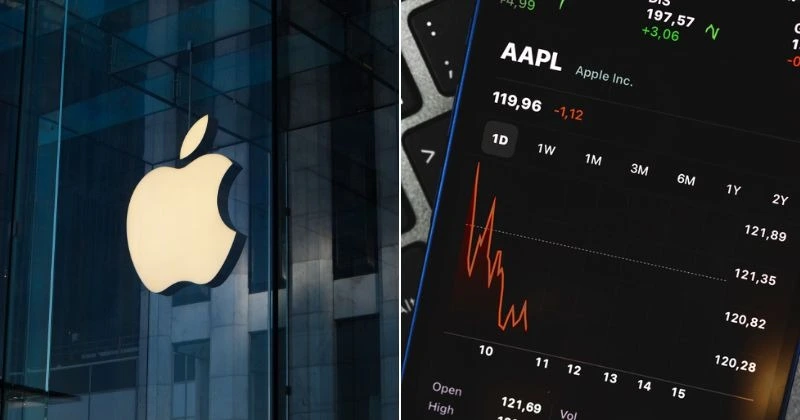
The China Problem No One Saw Coming
In a rare move, three major Wall Street firms simultaneously downgraded Apple to 'Sell' after iPhone shipments missed estimates by 8 million units in Q4. The company's China exposure has become its Achilles' heel as domestic brands like Huawei and Xiaomi capture market share with aggressive 5G pricing and government support. Services revenue grew 12% but failed to offset hardware weakness. Apple's vaunted $110 billion buyback program provided temporary support but analysts now question its sustainability. The launch of Apple Intelligence features has been delayed multiple times, eroding consumer excitement.
Is the Growth Story Over?
Despite maintaining premium pricing power in Western markets, the growth story appears increasingly dependent on saturated markets. The stock now trades at its lowest forward P/E since 2022, but many believe even this valuation is too rich given the headwinds. iPhone upgrade cycles have lengthened from 2 years to nearly 4 as consumers find less compelling reasons to upgrade. The Vision Pro mixed reality headset has sold fewer than 500,000 units — far below expectations. Meanwhile, competitors like Samsung are gaining ground in the foldable phone market that Apple has yet to enter.
Wall Street's Changing Sentiment
The downgrade of Apple's stock to 'Sell' by multiple Wall Street firms marked a significant shift in institutional investor sentiment. MoffettNathanson reduced Apple's target price from $202 to $188, indicating a potential 23% downside, with analyst Craig Moffett citing a "decidedly unattractive" outlook. This downgrade came despite Apple shares rising 30% in 2024, which Moffett argued was unjustified given the company's fundamental challenges. Raymond James also downgraded Apple, expressing concerns over iPhone sales, particularly in the Chinese market, and suggesting that gains would be hard to come by in 2026. Oppenheimer similarly changed its rating from "outperform" to "perform" due to concerns over declining iPhone sales and challenges in the competitive AI landscape. These downgrades represented the fifth downgrade for Apple in January 2025, highlighting growing caution among investors regarding the company's performance.
The convergence of multiple analyst downgrades on Apple was unusual and reflected deepening concerns about the company's trajectory. Jefferies downgraded Apple to "underperform," citing a projected 4% year-over-year decline in iPhone shipments, while Loop Capital changed its rating from "buy" to "hold." The iPhone 16, featuring AI capabilities, received mixed reviews, and its key features were not available in China, further impacting sales. Local competitors like Xiaomi were gaining market share, exacerbating Apple's challenges in this crucial market. The downgrade from MoffettNathanson was particularly significant as it removed Apple from the "conviction buy" list, reflecting concerns about premium valuations and negative news affecting the company. Analyst Martin Yang from Oppenheimer anticipated only 2% growth in iPhone shipments heading into fiscal 2026, attributing this to slow adoption of Apple's AI initiatives and the rapid advancements of competitors.
China Market Dynamics and Competitive Pressures
Apple's challenges in the Chinese market extended beyond simple market share losses to structural competitive disadvantages. In Q2 2025, Apple experienced an 8% year-over-year growth in iPhone sales in China, marking its first quarterly increase since Q2 2023, attributed to strategic price cuts, government subsidies for mid-range devices, and competitive pricing during the 618 shopping festival. However, Apple still ranked fifth in the Chinese smartphone market with a 13.9% market share, trailing behind Huawei (18.1%), Xiaomi (15.8%), vivo (15.1%), and OPPO (14.8%). The overall smartphone market in China contracted by 4% YoY, influenced by economic challenges and weak consumer spending, making market share preservation particularly difficult. Despite this modest recovery, Apple's China exposure became its Achilles' heel as domestic brands like Huawei and Xiaomi captured market share with aggressive 5G pricing and government support.
The competitive landscape in China continued to intensify, with Huawei regaining its position as the top smartphone brand in the country. Huawei's resurgence was supported by its innovative technology and strong brand loyalty, despite facing geopolitical challenges. Apple's market share dropped to 18% from 22%, as mentioned in the original article, due to intensified competition from local players who better understood consumer preferences and had stronger government relationships. However, more recent data suggested a potential turnaround, with the iPhone 17 series significantly boosting Apple's market presence in China, elevating its market share to over 20% by late 2025. In November 2025, Apple reported monthly shipments exceeding 6 million units, indicating a strong recovery in the competitive landscape against rivals like Huawei and Xiaomi. This resurgence marked a phenomenal turnaround from previous projections, shifting from a predicted 1% decline in the Chinese market to an expected 3% growth for Apple in 2025.
Services Revenue and Capital Allocation
While hardware sales faced challenges, Apple's services segment showed resilience and growth potential. In Q4 2025, Apple's services segment achieved significant growth, generating $28.8 billion, a 15% year-over-year increase, contributing to a total services revenue exceeding $100 billion for the fiscal year. This growth was driven by strong performance across various services, including advertising, App Store, cloud services, and music. The September 2025 quarter saw a 15% increase in services revenue, reaching a new record and contributing significantly to Apple's overall performance. CEO Tim Cook highlighted the importance of the services segment, which reached 29% of total revenue, indicating its growing significance to Apple's financial stability. Despite hardware weakness, the services segment provided a buffer and demonstrated the stickiness of Apple's ecosystem. The company reported record services revenue growth in its second quarter, with CEO Tim Cook emphasizing strong customer loyalty and satisfaction that helped reach an all-time high in the active device base.
Apple's capital allocation strategy, centered on its $110 billion buyback program, provided temporary support to the stock price but raised questions about long-term growth investments. In its Q3 2025 earnings report, Apple revealed it had spent $70.5 billion on its stock buyback program over the past nine months, marking an increase from the previous year. This aggressive buyback strategy reflected Apple's strong business performance, which also saw a 12% growth in earnings per share (EPS). The company announced a cash dividend of $0.26 per share, a 4% increase, and initiated a stock buyback program of up to $100 billion. However, analysts questioned the sustainability of relying heavily on buybacks to support the stock price rather than investing in growth initiatives. The buyback program, while beneficial for shareholders in the short term, did not address underlying challenges in hardware innovation and market share retention. Some analysts argued that the massive buybacks were masking fundamental business weaknesses rather than solving them.
AI Innovation Challenges and Product Pipeline
Apple's much-anticipated AI features, branded as 'Apple Intelligence,' faced significant delays and underperformance compared to competitors. The launch of Apple Intelligence features was delayed multiple times, eroding consumer excitement and allowing competitors like Google and Microsoft to establish stronger positions in the generative AI space. Analysts noted that Apple's AI implementation lagged behind rivals, with features like advanced Siri capabilities and generative AI tools arriving later and with fewer capabilities. The iPhone 16's AI features received mixed reviews, and key functionalities were not available in China, limiting their global impact. Apple's generative AI initiatives struggled to compete with rivals like ChatGPT, leading to concerns about the company's ability to introduce successful AI-enhanced products. The delay in AI features was particularly damaging in the Chinese market, where local competitors quickly integrated advanced AI capabilities into their devices. Apple CEO Tim Cook acknowledged challenges with Apple Intelligence, noting that the company was working to accelerate development while competitors gained market share.
The Vision Pro mixed reality headset exemplified Apple's challenges in delivering innovative products that capture market imagination. The device experienced disappointing sales, with only 45,000 units shipped in Q4 2025, despite strong performance in other product lines. Analysts attributed the lackluster sales to the headset's high price of $3,500 and its weight, which deterred potential buyers. Apple reportedly reduced production and marketing efforts, with its manufacturing partner Luxshare halting production early in 2025. Digital advertising for the Vision Pro was reduced by 95%, signaling a retreat from aggressive promotion. The company faced criticism for delays in integrating advanced AI features that could enhance the device's appeal in the mixed reality space. Apple's Vision Pro and AI bets were falling short of their promises, with the device receiving a lukewarm response that impacted sales performance. As iPhone sales stagnated, these setbacks created an uphill battle for Apple in establishing leadership in emerging technology categories. The Vision Pro's performance raised questions about Apple's ability to create compelling products in new categories where it lacked established market presence. Looking ahead, Apple needed to address these innovation challenges to restore investor confidence and maintain its premium positioning in the technology market.