 Macro Anton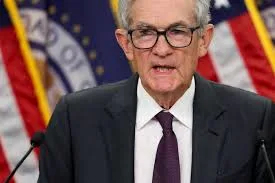
Fed Cuts Rates to 4.25-4.50% Amid Cautious Outlook
The Federal Reserve implemented its third interest rate cut of 2024 on December 18, reducing the federal funds rate by 25 basis points to a range of 4.25% to 4.50%. While the cut was widely anticipated by markets, the Fed's accompanying economic projections and forward guidance caught investors off guard, sending the S&P 500 down 2.96% in one of its worst single-day performances since August. The decision marked the Fed's third rate reduction in the current cycle, following cuts in September and November, but signaled a more conservative approach to future monetary policy adjustments.
The Fed's policy statement revealed a significant shift in tone, with officials now projecting only two additional rate cuts in 2025, down from the four that markets had been expecting. This more hawkish stance reflects persistent concerns about inflation, which remains above the Fed's 2% target, particularly in core measures that exclude volatile food and energy prices. The core Personal Consumption Expenditures (PCE) inflation is projected at 3.0% for 2025, significantly higher than the Fed's long-run target.
Market Volatility Reflects Disappointment
Financial markets reacted negatively to the Fed's cautious messaging, with the S&P 500 plummeting 2.96% and the Nasdaq Composite falling 3.62% following the announcement. The Dow Jones Industrial Average registered its worst single-session drop in months, falling 2.61% or over 1,100 points. The CBOE Volatility Index (VIX) surged as investors recalibrated expectations for monetary policy in 2025. The market selloff reflected a repricing of expectations, as investors had been betting on more aggressive rate cuts to stimulate economic growth and support asset prices.
Fixed income markets also experienced significant movement, with Treasury yields rising across the curve as investors adjusted their expectations for future rate cuts. The 10-year Treasury yield climbed more than 20 basis points following the Fed announcement, reflecting concerns about the trajectory of monetary policy. Currency markets showed the dollar strengthening against major peers, as the Fed's more cautious approach relative to other central banks made dollar-denominated assets more attractive.
Inflation Concerns Drive Policy Caution
Fed Chair Jerome Powell emphasized ongoing inflation concerns during the post-meeting press conference, noting that while progress has been made, inflation remains elevated above the Committee's 2% objective. Powell highlighted particular concern about shelter costs, which account for approximately one-third of the core PCE index and have proven resistant to decline. The Fed's economic projections suggest inflation will remain above target through 2025, with the PCE price index expected to finish the year at 2.9%.
The Federal Reserve's Summary of Economic Projections released alongside the rate decision painted a picture of persistent inflationary pressures. Participants' forecasts indicated that inflation would gradually decline over the next few years but would remain above the 2% target well into 2026. This persistence of inflation has been attributed to various factors, including elevated housing costs, services inflation, and potential second-round effects from labor market tightness. The Fed's cautious stance reflects their assessment that premature easing could undermine progress on price stability.
Labor Market Shows Resilience
The Fed's projections for the labor market remained relatively optimistic, with the unemployment rate expected to hold at 4.5% in 2025 before gradually declining to 4.2% by 2028. The job market has demonstrated remarkable resilience despite high interest rates, with employers continuing to add workers at a monthly pace of approximately 125,000 in 2025 according to professional forecasters. This strength in employment has provided the Fed with flexibility to maintain a cautious approach to rate cuts, as policymakers balance the dual mandate of maximum employment and price stability.
However, Fed officials acknowledged that the labor market is showing signs of cooling, with job growth moderating and wage growth declining from its peaks. The challenge for policymakers lies in calibrating monetary policy to achieve a 'soft landing' - slowing economic growth enough to bring inflation down without triggering a recession or causing significant job losses. The Fed's projection of a stable unemployment rate suggests confidence that this delicate balance can be achieved, though risks remain on both sides.
Policy Implications and Forward Guidance
The Federal Reserve's 'dot plot' projections, which show individual officials' expectations for future rates, indicated that policymakers expect only two more 25-basis-point cuts in 2025 and 2026 combined. This represents a significant downshift from previous expectations and suggests that the Fed is closer to reaching a neutral stance on interest rates. The median projection implies that the fed funds rate may settle around 3.75% by early 2025, representing a more restrictive monetary policy stance than many investors had anticipated.
The dissenting vote from Cleveland Fed President Beth Hammack, who favored holding rates steady, underscores the divide within the Federal Open Market Committee regarding the appropriate pace of easing. This internal disagreement reflects the difficulty of navigating between supporting economic growth and controlling inflation in an environment of elevated borrowing costs. The Fed's commitment to data-dependent policy means that future rate decisions will be contingent on incoming economic data, particularly inflation metrics and labor market indicators.
Economic Outlook and Risks
Professional forecasters surveyed in the Fourth Quarter 2025 Survey of Professional Forecasters project real GDP growth of 1.9% for 2025 and 1.8% for 2026, representing modest expansion despite restrictive monetary policy. The unemployment rate is expected to remain stable initially at 4.2% in 2025 before gradually declining to 4.3% by 2028. These projections suggest a scenario of moderate growth with contained labor market disruption, though the risks are increasingly skewed toward either slower growth if the Fed maintains restrictive policy too long or resurgent inflation if policy is eased prematurely.
Looking ahead, the Federal Reserve faces significant challenges in navigating economic policy amid persistent inflation concerns and a resilient labor market. The path forward will likely depend on incoming data, particularly inflation readings in the coming months. If inflation continues to decline toward the 2% target, the Fed may feel comfortable proceeding with additional rate cuts. Conversely, if inflation proves stickier than expected, the Fed may need to maintain restrictive policy for longer than currently projected. The market's sharp reaction to the December 2024 meeting signals that investors will be closely watching future data releases and Fed communications for signs of policy pivots.