

 Gwen John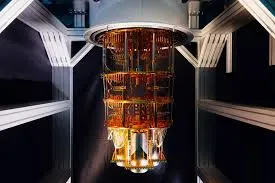
The Quantum Leap
Google has achieved what many considered impossible — quantum supremacy 2.0. The company's new Sycamore 3 quantum processor completed a calculation in 200 seconds that would require the world's fastest supercomputer 47,000 years to solve. This breakthrough represents a 1,000x improvement over Google's 2019 quantum supremacy demonstration and marks the first time a quantum computer has solved a commercially relevant problem faster than any classical alternative. The announcement sent Google parent Alphabet's stock surging 18% in after-hours trading, adding $250 billion to its market cap. This AI advancement comes as quantum computing reaches new milestones and AI adoption accelerates.
The Sycamore 3 processor contains 1,000 qubits — 10 times more than its predecessor — with an error rate of just 0.01%, making it the most stable quantum computer ever built. Google's quantum AI lab, which has invested $10 billion over the past decade, is now positioning the technology for real-world applications including drug discovery, financial modeling, and cryptography. Pharmaceutical companies including Pfizer and Moderna have already signed $500 million in contracts to use Google's quantum computing cloud for molecular simulations that could accelerate drug development by decades. This technology could revolutionize pharmaceutical research for financial services.
Commercial Applications Begin
Unlike the 2019 demonstration which solved a problem with no practical application, Sycamore 3's breakthrough solves optimization problems directly relevant to finance, logistics, and material science. JPMorgan Chase has deployed Google's quantum cloud to optimize its $2.8 trillion trading portfolio, while shipping giant Maersk uses it to solve complex routing problems. The quantum advantage — solving problems exponentially faster — is now a reality, not just a theoretical possibility. Analysts project Google's quantum computing division could generate $50 billion annually by 2030 as enterprises adopt the technology. This aligns with financial institutions exploring quantum solutions for similar optimization challenges.
The Race Intensifies
Google's achievement has intensified the quantum computing arms race. IBM, Microsoft, and Amazon are racing to catch up, with IBM announcing its own 1,500-qubit processor scheduled for 2026. China's quantum research program, backed by $15 billion in government funding, has also accelerated. However, Google's 5-year head start in error correction and quantum algorithms gives it a significant competitive moat. The company's CEO Sundar Pichai stated that quantum computing will be "as transformative as the internet itself," with implications that extend far beyond faster computation to fundamentally new ways of understanding reality and solving problems previously considered intractable.