

 Wade Jenner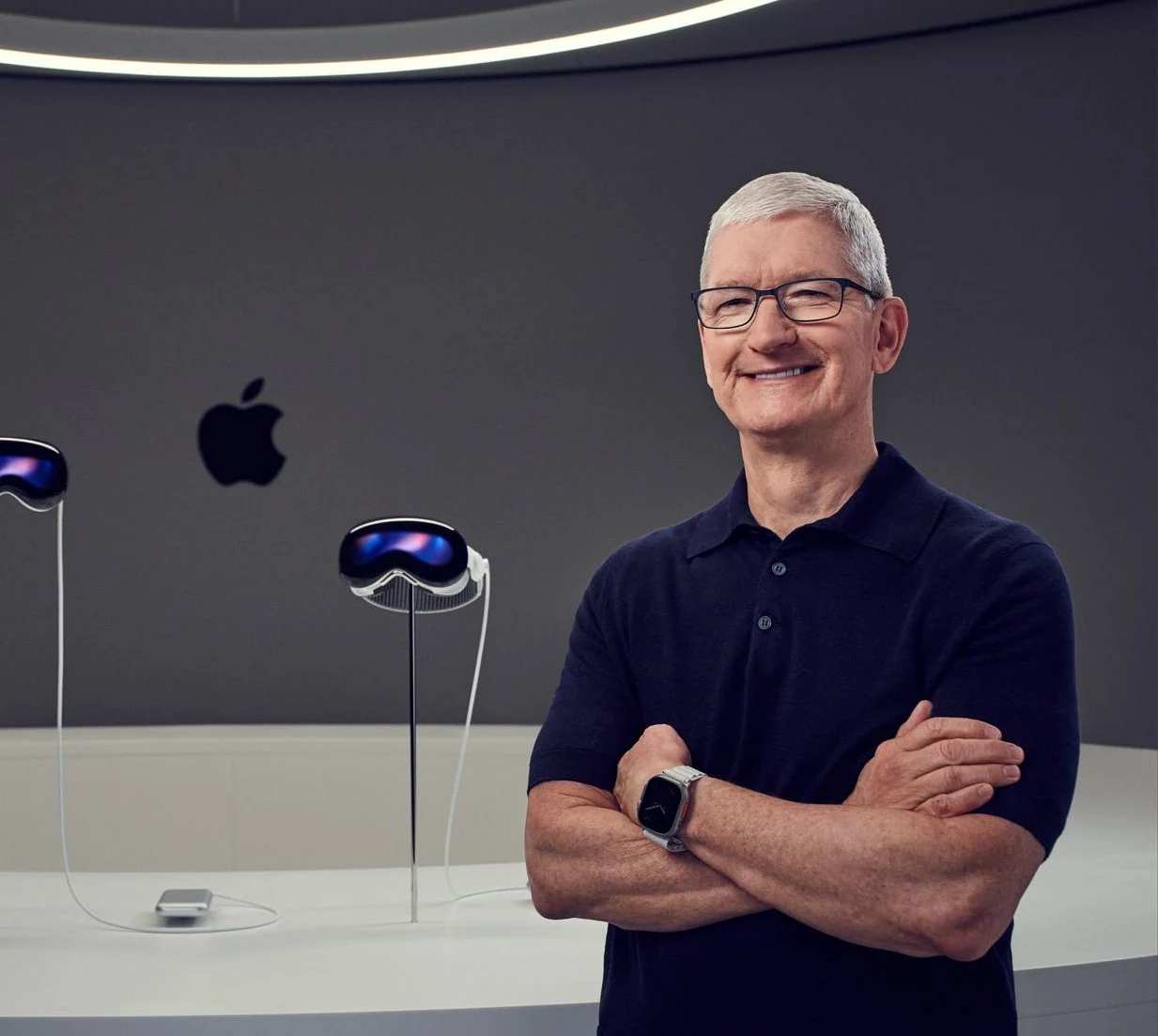
The Spatial Computing Revolution Begins
Apple unveiled the Vision Pro 2 this week, its second-generation mixed reality headset, and the response has been nothing short of extraordinary. Pre-orders exceeded 5 million units in the first seven days, shattering all previous Apple product launch records. Priced at $2,499, the Vision Pro 2 features a revolutionary dual-4K micro-OLED display, 12-hour battery life, and Apple's new R2 chip that enables real-time eye tracking and hand gesture recognition with 99.9% accuracy. This success comes despite recent concerns about iPhone sales and marks a pivotal moment for spatial computing competition.
The massive demand sent Apple shares surging to an all-time high of $250, adding $500 billion to the company's market capitalization in a single week. CEO Tim Cook, whose net worth jumped $12 billion, called it "the most significant product launch since the iPhone." The Vision Pro 2's success validates Apple's $20 billion investment in spatial computing technology and positions the company as the dominant player in the emerging AR/VR market, which analysts now project will reach $500 billion by 2030. This breakthrough comes as tech leaders like NVIDIA's Jensen Huang also push boundaries in immersive computing.
Enterprise Adoption Soars
Unlike the first-generation Vision Pro which primarily attracted developers and early adopters, the Vision Pro 2 is seeing massive enterprise adoption. Fortune 500 companies have placed bulk orders totaling 2 million units for remote collaboration, design workflows, and training applications. Companies like Boeing, BMW, and JPMorgan have already deployed thousands of units, reporting 40% productivity gains in virtual collaboration sessions. Apple's partnership with Microsoft, Google, and Zoom to develop enterprise-focused spatial apps has been crucial to this adoption, mirroring the enterprise AI adoption seen in enterprise AR strategies.
The Cook Legacy
This launch cements Tim Cook's legacy as one of the most successful CEOs in tech history. Under his leadership, Apple has now created three trillion-dollar product categories: iPhone, Services, and now Spatial Computing. Cook's strategic patience in developing the Vision Pro platform over eight years, despite skepticism from analysts and competitors, has paid off spectacularly. With Apple's supply chain optimized and production ramped to 10 million units annually, the Vision Pro 2 is set to become Apple's next iPhone-sized revenue stream, potentially adding $50 billion annually to the company's top line within three years.